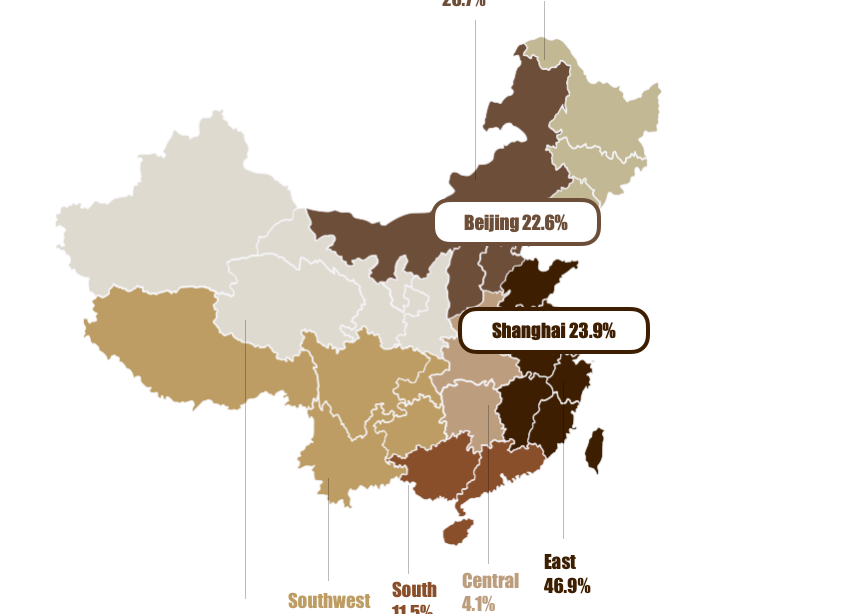

In 2017, China officially became the second largest art market in the world, as it accounted for 21% of $63bn in global art sales. However, the Chinese art market seems to mostly keep to itself. The majority of Chinese contemporary artworks are bought and sold by the Chinese. About 80% of the sales of top Chinese contemporary artists like Zao Wou-ki and Zeng Fanzhi are made in China.
Some believe that the Chinese contemporary art market is in its own bubble. Chinese art critic Wang Duanting said: “Chinese art has not yet entered the international market. Only if Western museums and collectors start to collect Chinese art, the Chinese art market will have its real value.”
It is unclear whether Westerners have interest in or are even familiar with Chinese contemporary art. To solve the mysteries of the performance of Chinese contemporary art in the West, I have talked to two art galleries and an institution that feature Chinese art: Hua in London, Eli Klein Gallery in New York, and Daimler Art Collection in Berlin.
Myth 1: No one buys Chinese contemporary art in the West
This is simply not true. In 2006, the Chinese artist Zhang Xiaogang's painting Bloodline Series: Comrade No. 120 sold for $979,200 in New York. It was the first piece of Chinese contemporary artwork to reach a nearly $1m sale in the West. In 2008, at a Phillip London's auction that featured Chinese contemporary art, nearly 90% of the 45 artworks were sold, including a Zeng Fanzhi piece that sold for more than £2m (about $3.6m). In 2013, the Venice Biennale featured nearly 350 Chinese artists.
According to Artnet's Global Chinese Art Auction Market Report 2017, the average turnover of Chinese contemporary art overseas has been increasing in recent years. International galleries including Hauser & Wirth and Gagosian and museums like the Guggenheim Museum and MOCA all have collections of Chinese contemporary art. In 2017, when China's overseas art market downsized and the quality of lots rose, the average price of Chinese 20th century and contemporary art increased by 19% to reach $207,423, exceeded the previous market peak in 2011. The sell-through rate also remained high at 60%, well above any other sector overseas.
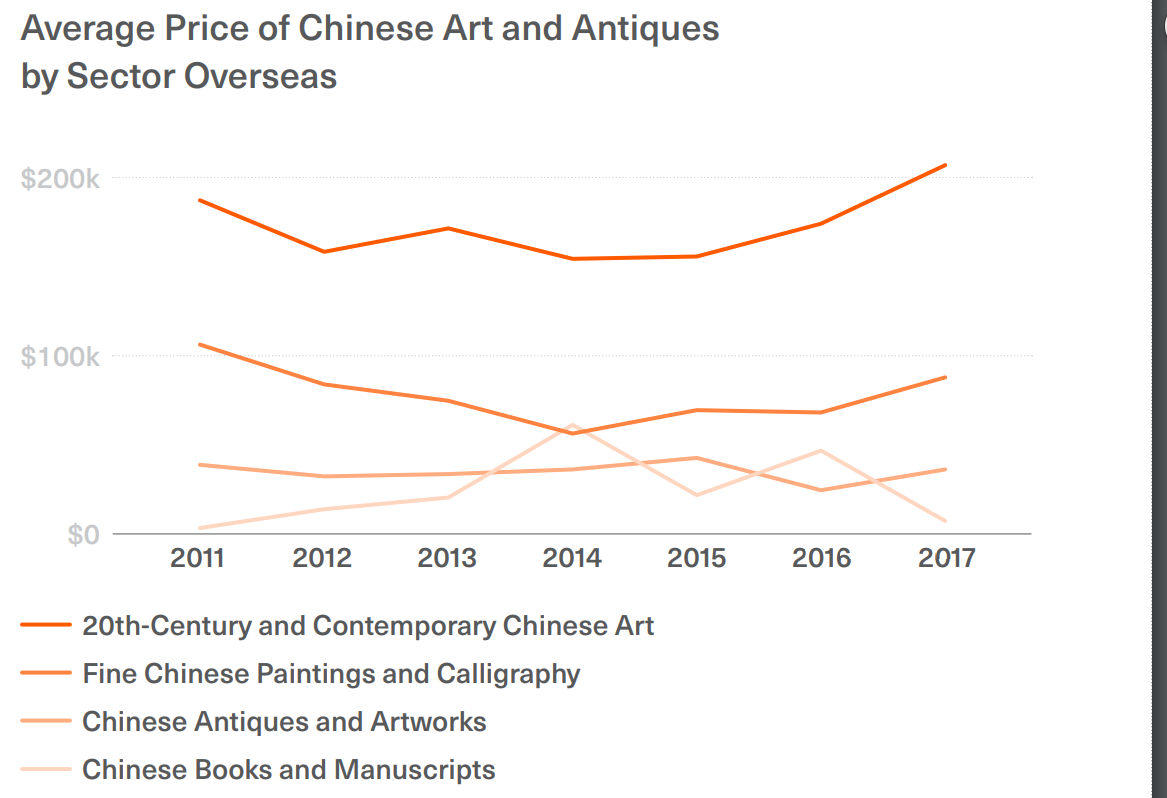
▲Data from Artnet'sGlobal Chinese Art Auction Market Report 2017
Even all three of our interviewed galleries started their collections of Chinese contemporary art a decade ago. New York-based gallery owner Eli Klein said: "I've always known that I wanted my gallery to focus on Chinese art. Chinese artists are underrepresented in New York, which is the centre of the art world, and China is a rising superpower. Looking at these two factors, it didn’t make sense to me that Chinese artists didn't have stronger representation.”
Some may argue that Chinese contemporary art is predominately purchased by collectors who only have a specific interest in it since for many Westerners, the only Chinese artist they know might be Ai Weiwei.
However, Mr Klein told us that was totally wrong: "If that was the case, I wouldn't be in business. There aren't enough collectors in the West who are interested in collecting only Chinese contemporary art. In fact, most of our collectors are first time buyers of Chinese contemporary art. The gallery has helped to grow interest in Chinese contemporary art and develop its collector base.”
Myth 2: Western collectors prefer artworks that contain strong Chinese symbols.
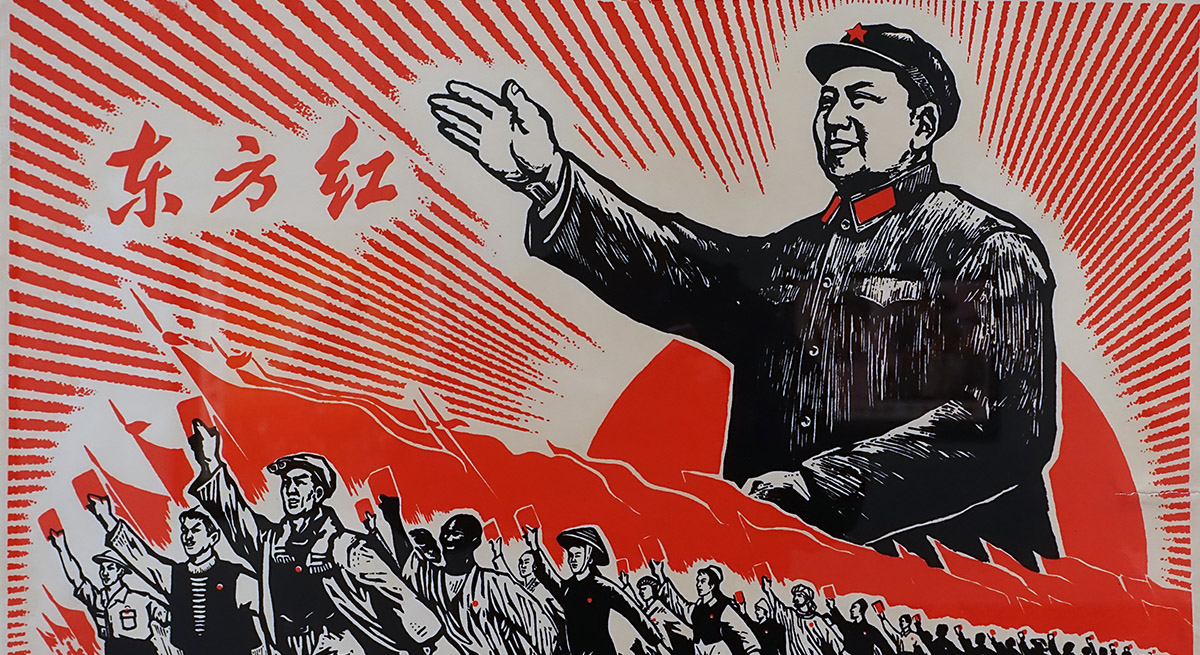
Not necessarily. When you look at the top sales of Chinese contemporary art in the West, there's no denying that they all somehow contain either political or classic Chinese elements.
Mr Klein said: "Oftentimes, strong Chinese symbols and elements speak strongly to Western collectors. Collectors often want to have a piece of China or something that feels specifically Chinese in their collection. Symbols of the times in China whether historical like Mao or contemporary images that have a social commentary appeals to these collectors.”
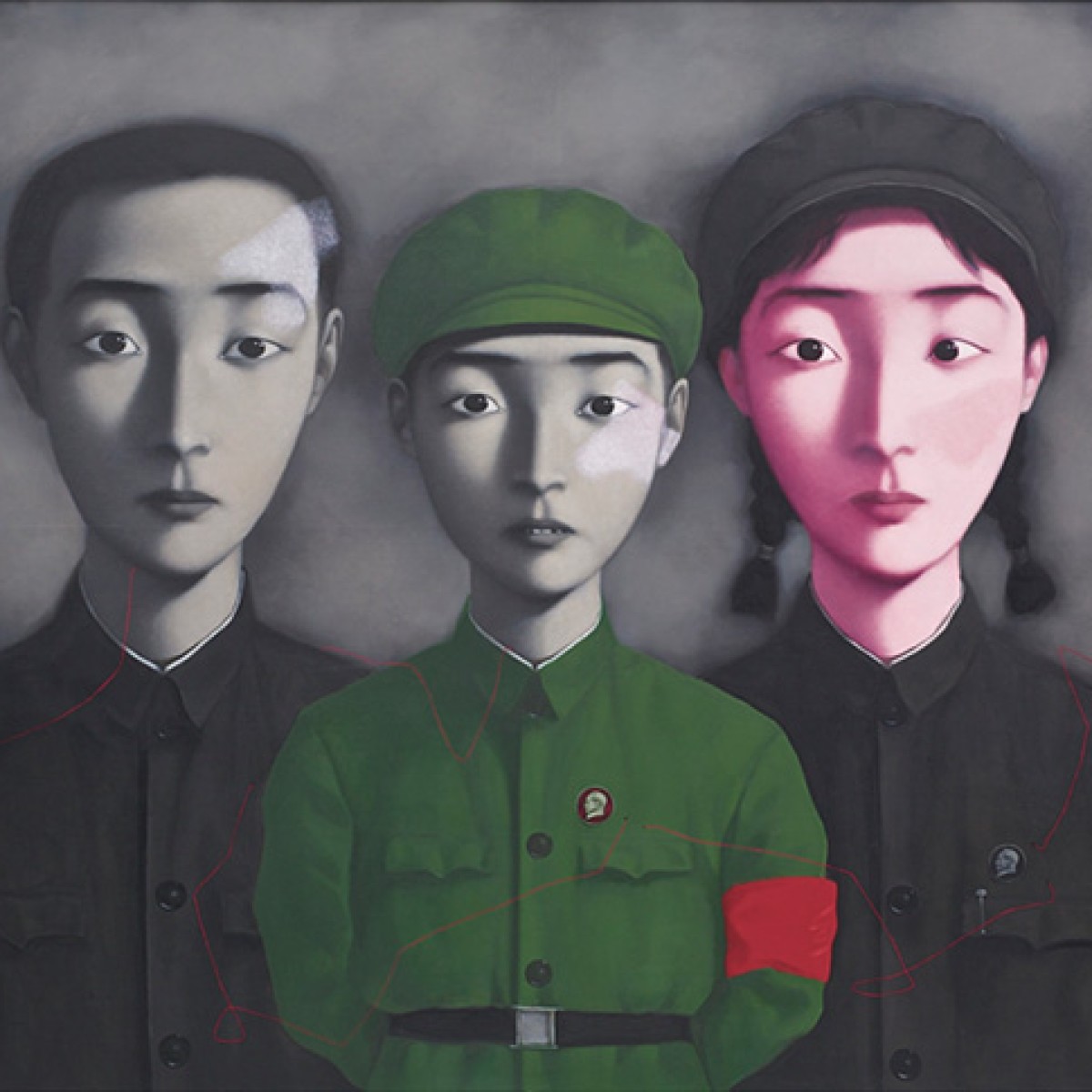
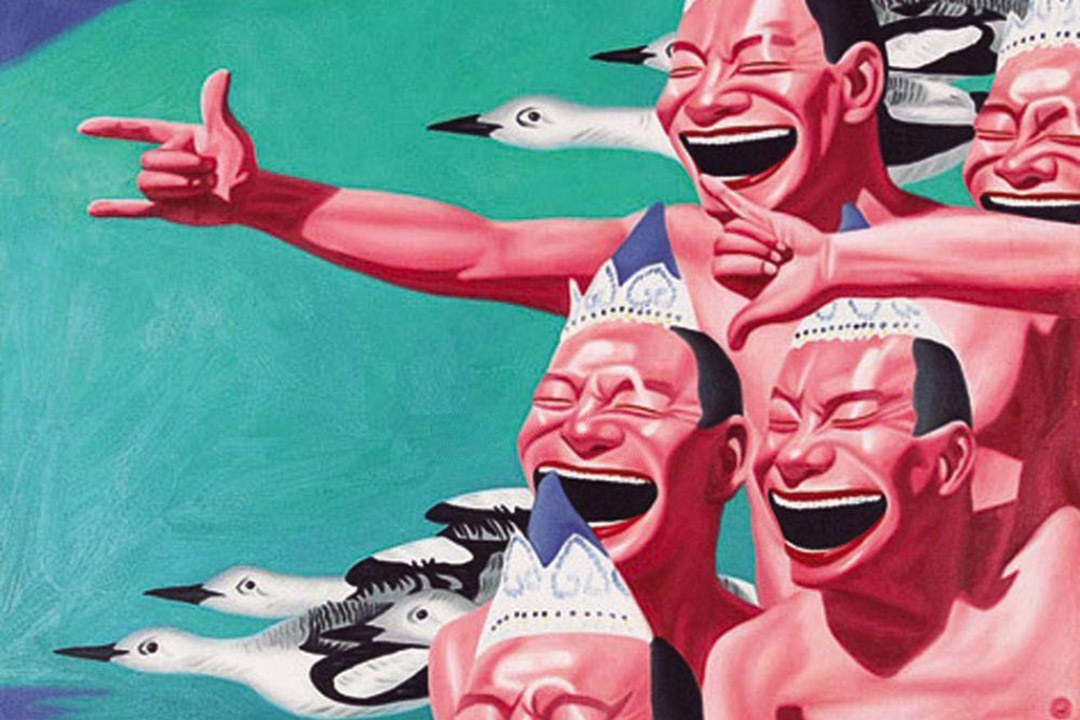
▲Bloneline series of Zhang Xiaogang is among the most well-known Chinese contemporary art in the west
However, that might not be entirely true. Art advisor Dagmar Carnevale Lavezzoli from Hua gives a different opinion: "Obviously since contemporary Chinese art is very broad and varied, it depends on the type of art created. It’s hard to say in the sense that every collector has got his or her own personal taste, and while someone might be attracted to the immediacy of Chinese symbols, others might prefer works whose Chinese flavour is more subtle. We have collectors who mostly buy works with iconic Chinese references as well as collectors who appreciate works regardless of whether or not they are clearly Chinese.”
Many art galleries or institutions in the West actually try to promote contemporary Chinese art in a broad way, refusing to confine it to a specific style, media, or concept. They select artists for their artistic individuality.
Myth 3: The Western world knows little about Chinese contemporary art
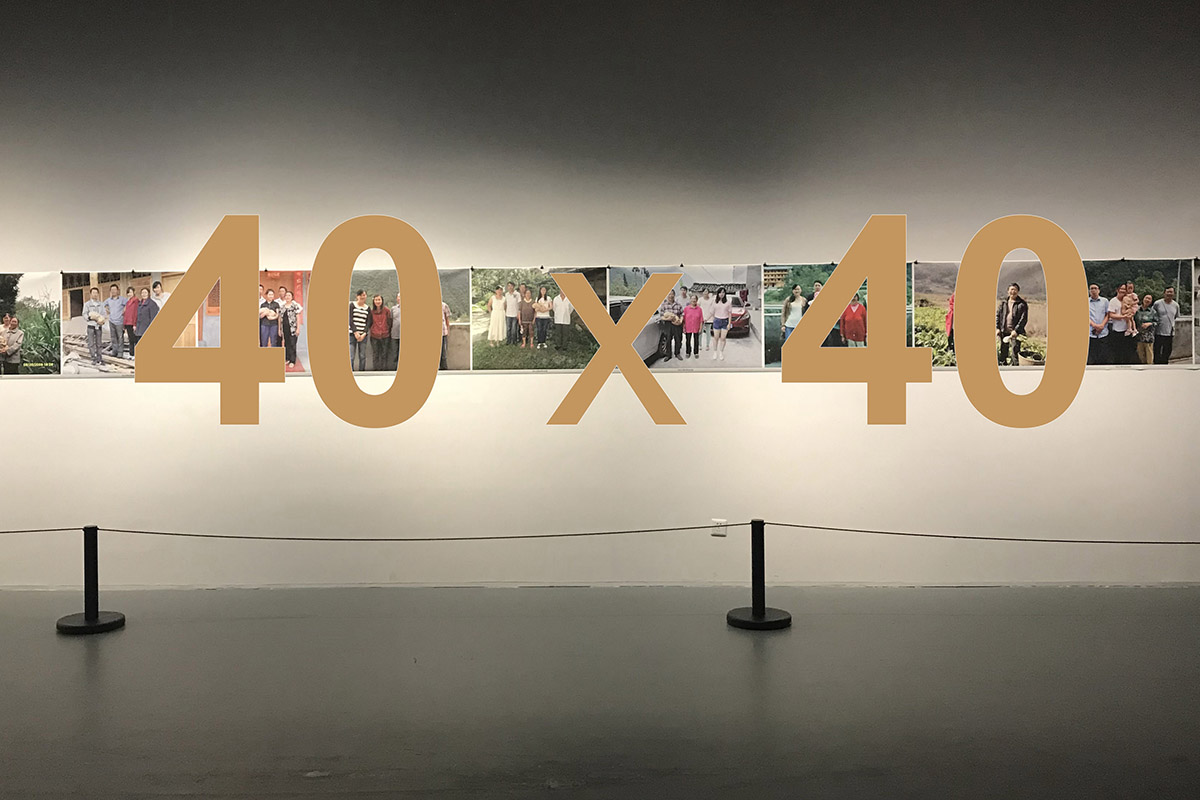
Unfortunately, this may be mostly true. We conducted a survey asking 40 people in Europe and the US who are in the art industry including auctioneers, museum staff, and artists. The results showed that nearly 70% of those surveyed were not familiar with Chinese contemporary art. Mr Klein told me: "The Chinese contemporary art market only started in the late 1980s and early 90s and became a market force in the 21st century. The Chinese contemporary art market is newer than other art markets so it is only natural that it takes time [for Westerners] to catch up.”
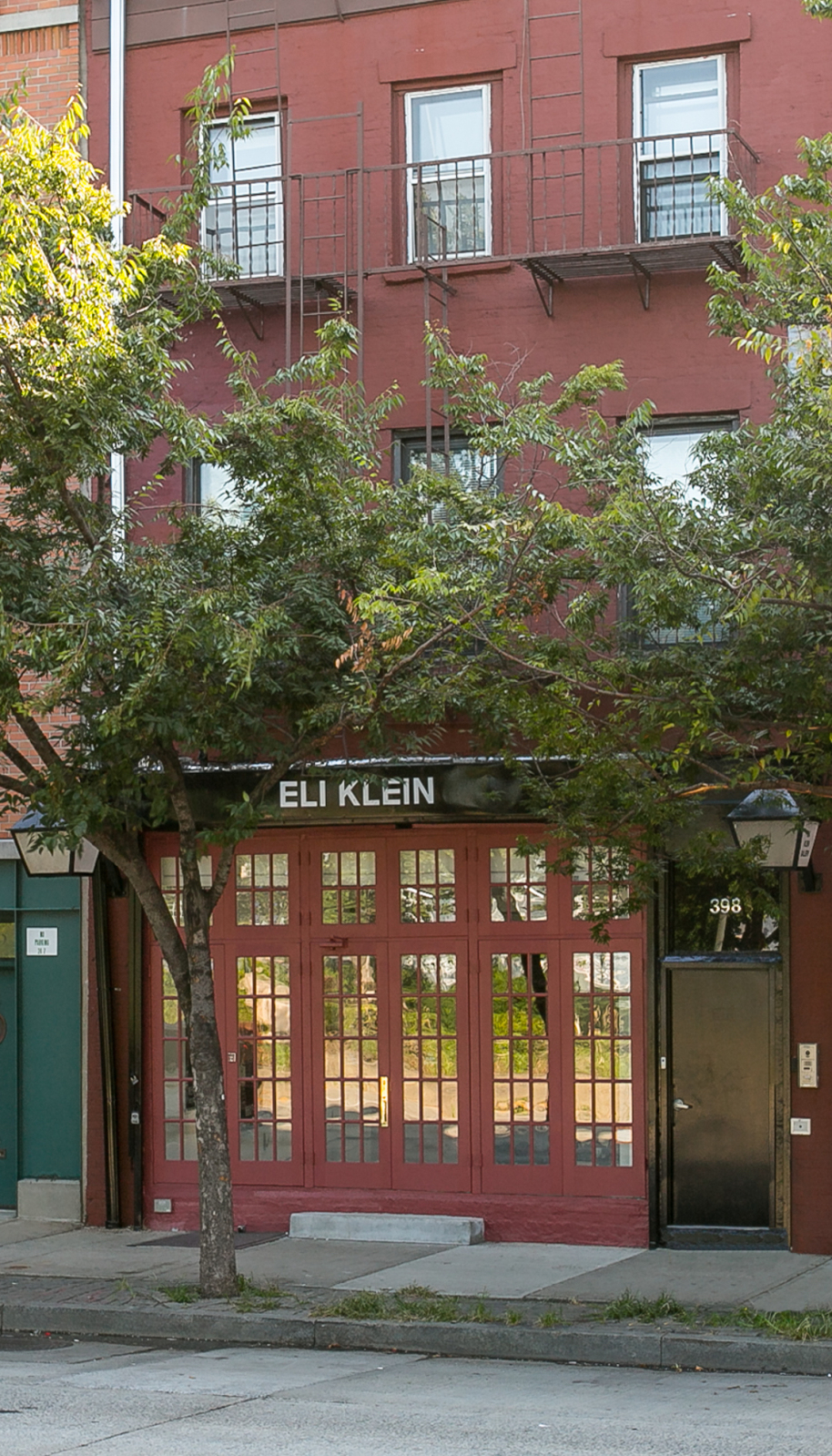
▲Eli Klein Gallery in New York
Moreover, the gamble in shelling out cash to the entirely new and unknown may prevent some collectors from purchasing Chinese contemporary art. Mr Klein explained: "For major collectors who have not collected contemporary Chinese art, it just feels out of their comfort zone. Old school collectors tend to be more hesitant than young collectors because it means delving into new territory.”
The unfamiliarity of Chinese contemporary art also leads to some struggles in introducing new artists. Ms Carnevale Lavezzoli said: "There are so many amazing artists out there that it is always a challenge to introduce a new artist and to make sure he or she will be appropriately appreciated.”
Nevertheless, the unfamiliarity can also be a chance to promote Chinese contemporary art. Dr Renate Wiehager, the Director of the Daimler Art Collection, said: "The challenge, but at the same time great chance, was to communicate the different history of the contemporary art scene in China, which is – compared to the Western culture – rather young. We presented the Chinese artworks in dialogue with the recent developments of international art.”
As China's art market is growing fast, the world is paying more attention to it. Ms Carnevale Lavezzoli said: "China is a country with a burgeoning international presence. Naturally, Chinese culture is being thrown into the limelight more and more. Off the back of this, we're seeing an incredible surge of interest in aspirational luxury Chinese items from Western buyers and art is also a part of that trend."
"The interest in China grows every year. I think the art world, just as the rest of the world, is intimidated by China and Chinese art," agreed by Mr Klein.