

The spring auction season is ready to kick off next week in Hong Kong. This year, Zao Wou-ki's 1958 untitled oil painting offered by the Guggenheim museum is indeed the highlight of the auction. However, the sales are more than that. We were honoured to have an interview with Felix Kwok, Asian deputy director of Sotheby's, to discuss the changes of Asia's art market within the past few years as well as the prediction of the art market performance for this year.
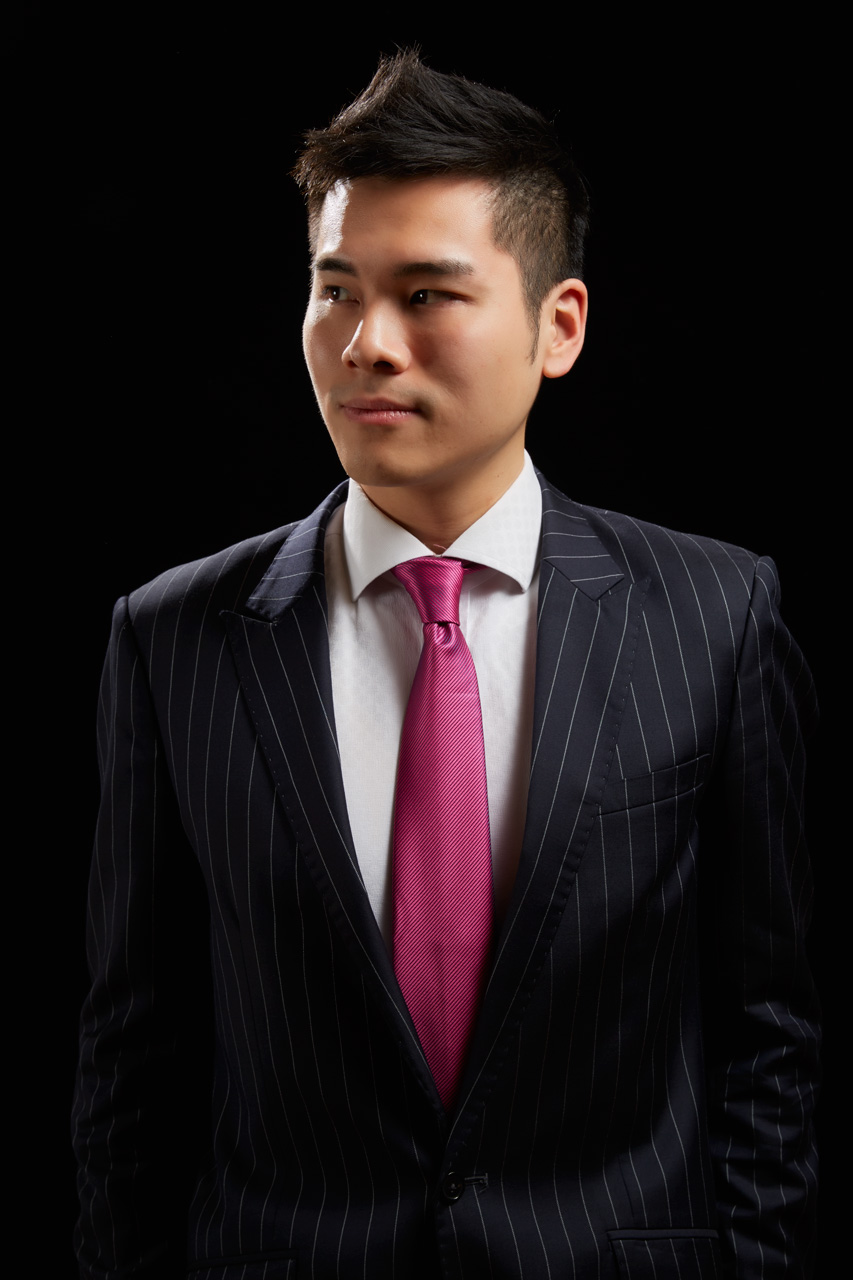
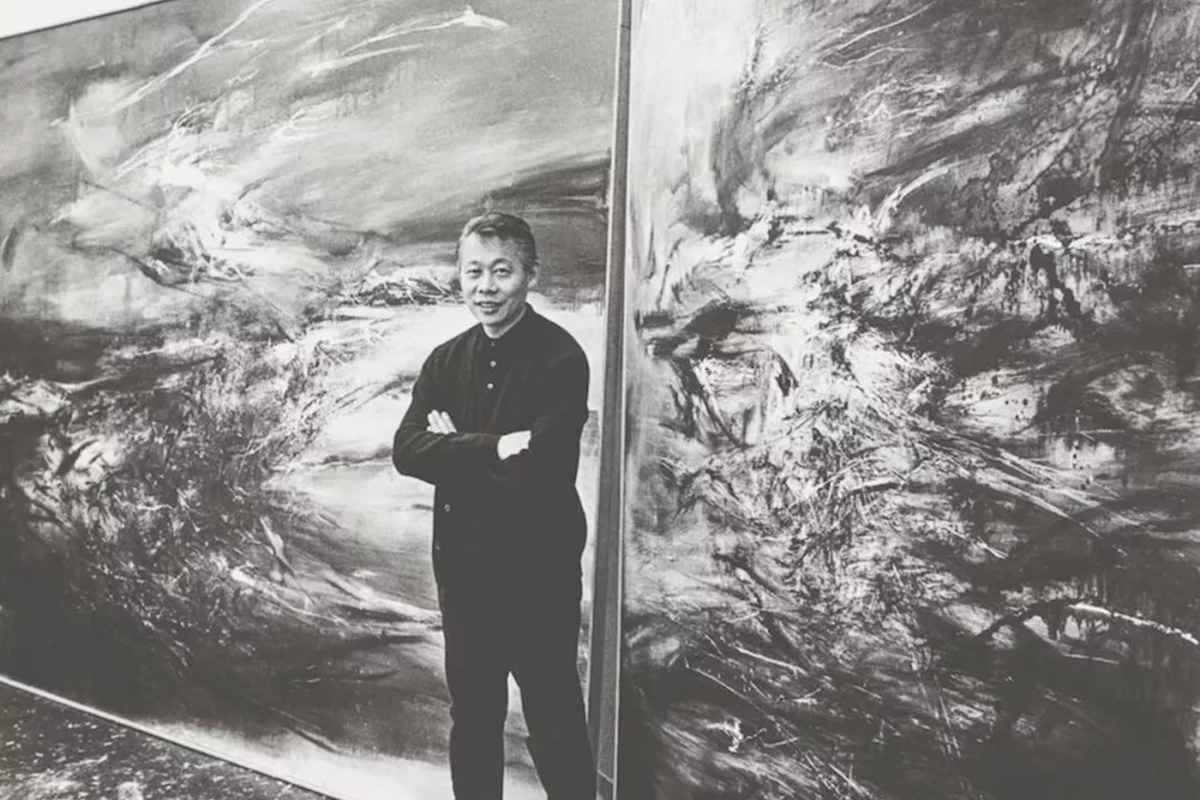
▲ Felix Kwok, Asian deputy director of Sotheby's, courtesy of Sotheby's
Art Market Journal: Last year, the turnover of Sotheby's Hong Kong reached HK$2tn (about $127m), the best performance of Sotheby's Hong Kong so far. What is your prediction of Sotheby's performance in the market this spring?
Felix Kwok: For us, 2018 is historic. We've sensed the art market in Asia has had a dramatic change. We know that the art market in Asia used to prefer traditional Chinese paintings or artefacts a lot. However, last year, the performance of modern and contemporary art at Sotheby's was stunning. This is not merely a commercial success; it also indicates the collectors' structure in Asia is changing.
On the one hand, we see the rise of young collectors, especially the millennials. On the other side, more collectors are starting to have a more international taste in art. Young collectors and globalised taste are the two keywords of the market that we'll keep paying attention to this year.
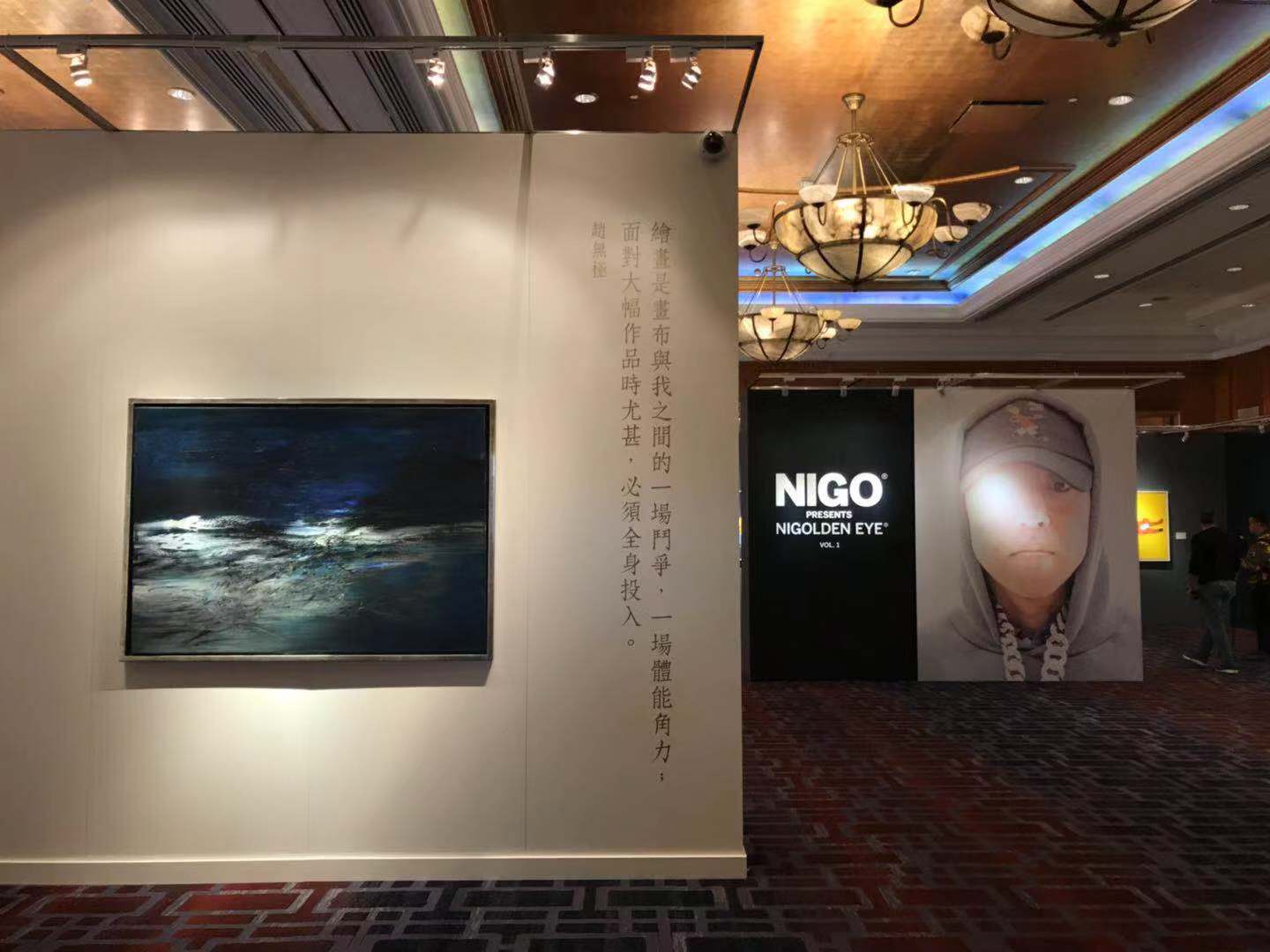
▲ Sotheby's Hong Kong auction preview in Shanghai
AMJ: As you said, Asian collectors seem to have shown a stronger interest in Western art in recent years. Do you think the Western artworks will sell better in Asia this year and in the near future?
FK: Absolutely. Asian collectors have collected oil paintings of Asian artists for more than 20 years. The high-quality oil paintings by Asian artists are rare in the market now. Naturally, these collectors have slowly shifted to collecting artworks by Western artists.
For example, we all know Zao Wou-ki's paintings are much liked by our collectors. However, there are fewer paintings by Zao in the market at the moment. Since it is difficult to collect Zao's paintings, many collectors are starting to pay attention to other post-war and modern French abstract artists, such as Georges Mathieu. They may think: why not collect some Western paintings to make my collection more diverse?
In fact, we introduced Georges Mathieu's paintings to our Asian collectors last year, and the result was very encouraging. This year, we've brought some of his best works, such as Chanson dispersée (1987). We're putting in more effort this time to promote more Western artists who are from the same era as Zao Wou-ki.
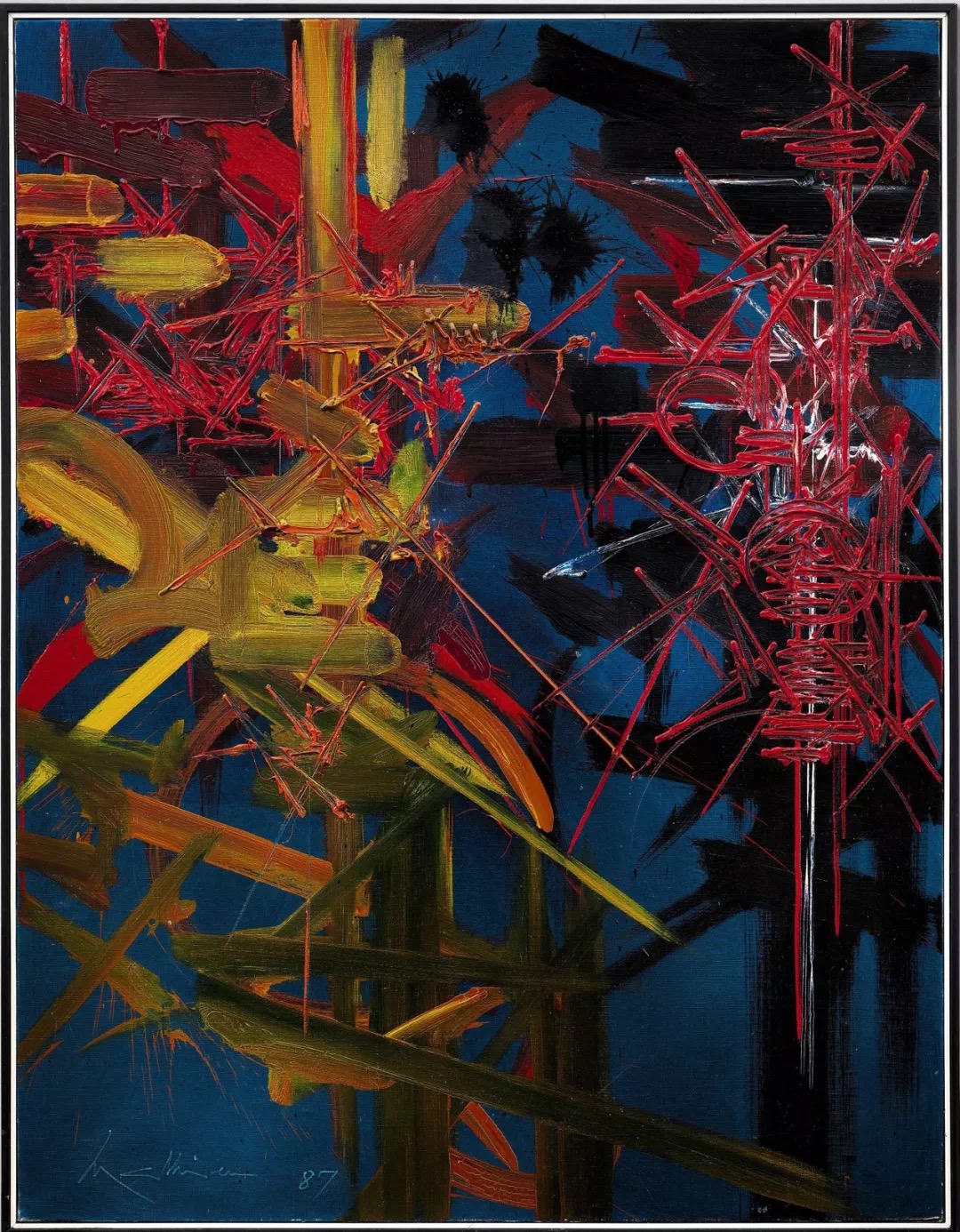
▲ Georges Mathieu, Chanson dispersée (1987)
AMJ: Since you've mentioned Zao Wou-ki, we'd like to discuss more about him. We know that last year, Zao's painting 6.10.1985 sold for more than HK$500m (about $63m), and this year, we've seen another one of Zao's painting offered by the Guggenheim. Why is Sotheby's Hong Kong so fond of Zao Wou-Ki?
FK: Well, I think this is probably our "destiny". Not only does our modern Asia art department like Zao's artworks very much, but the company as a whole does as well. The fondness towards the artist pushes us to research and learn more about Zao. Whenever we try to sell a Zao painting, we spend a lot of time doing background research to understand it better. I guess that's why the 6.10.1985 broke the record last year.
AMJ: We read an article by The Art Newspaper that stated: "Guggenheim deaccessions work by Zao Wou-Ki as the market for the artist swells". What's your opinion on that?
FK: We're honoured to be entrusted by major museums around the world to help them sell artworks. This is our third time helping a vital museum client sell a Zao painting. Our first time was with the Art Institute of Chicago in 2013 and our second time was with the Carnegie Museum of Art last year. I know that it is difficult for museums to decide to sell their artworks.
The painting offered by Guggenheim has been preserved at the museum for 55 years. Before that, the painting was owned by an American politician. From this simple fact, we know that many Western collectors like and treasure Zao Wou-ki's artworks.
I don't think the Guggenheim's decision to sell Zao's painting means the deaccession of the artist's market. First, the Guggenheim has more than one of Zao's paintings. On the other hand, buying new artworks from selling old ones is very common among museums. We've also seen SFMOMSA sell Mark Rothko's artwork at Sotheby's New York. Therefore, there is no need to worry about the market of Zao Wou-Ki.
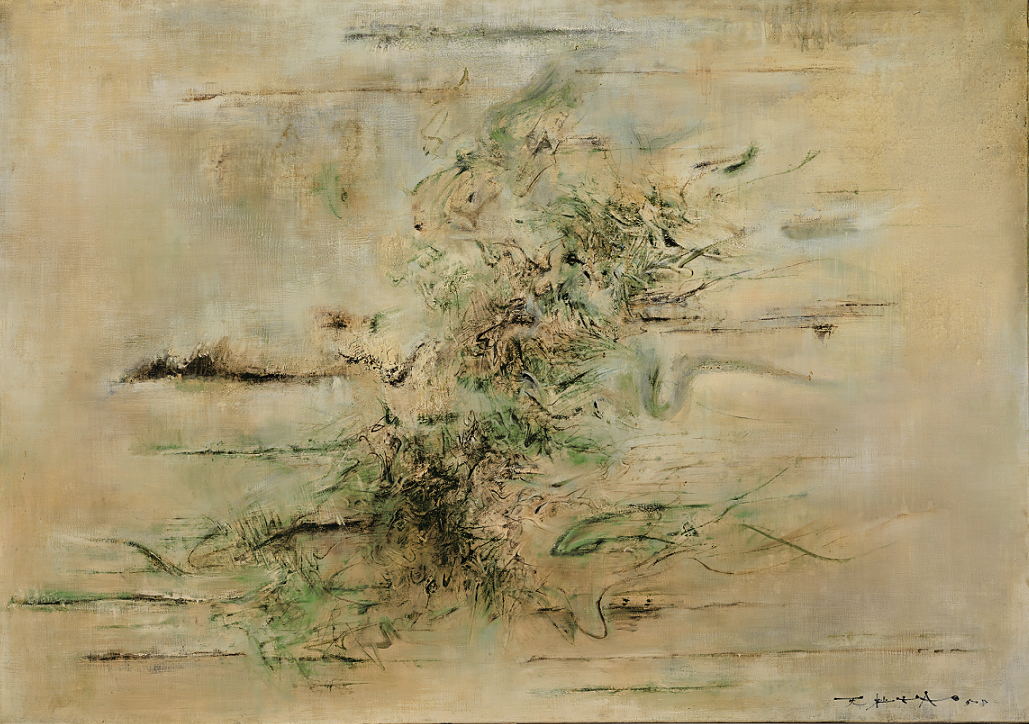
▲ Zao Wou-Ki, Untitle (1958), courtesy of Sotheby's
AMJ: Apart from Zao Wou-ki, what are other highlights of Sotheby's spring sales?
FK: The cover picture of this year's evening sale of modern art is Wu Guanzhong's LotusFlowers (I). This is Wu's biggest colour oil painting from the 70s. Another important artist in our spring sales is Guan Liang. We've planned to sell 20 of his pieces.
Moreover, we've paid much attention to Chinese post-war artists. We know there are many famous post-war artists in the West. Nevertheless, we know little about post-war Asian artists. In fact, many Asian artists went to Europe and the US in the second half of the 20th century. Hsiao Chin (Xiao Qin), who went to Milan to develop his career and established the Punto movement, is a good example.
The Asian post-war artists actually form the solid second-tier of our auction market in Hong Kong. Sotheby's Hong Kong doesn't only focus on the high-end market. The second-tier market is also crucial for us. The paintings by artists like Hsiao Chin, Lin Shouyu, and Xie JInglan, whose artworks’'price range are HK$1m to HK$10m (about $127,000 to $1.2m), performed well last year in our auctions. We're looking forward to their performances this year.
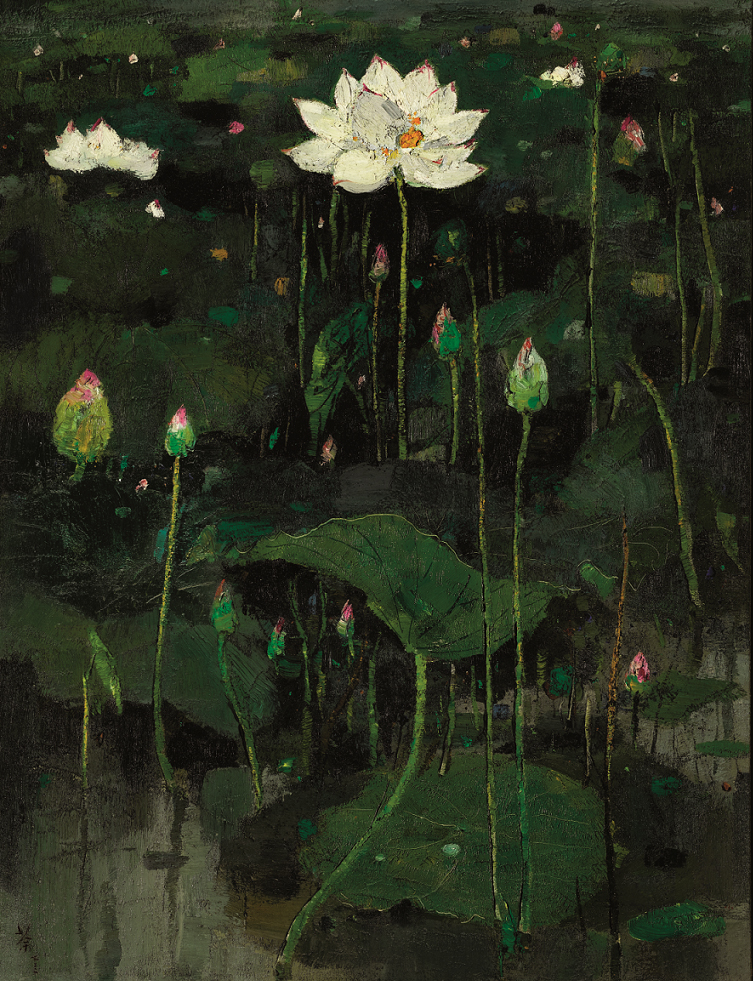
▲ Wu Guanzhong, Lotus Flowers (I), 1974
AMJ: What is the biggest challenge for Sotheby's Hong Kong this year to have a good performance?
FK: Regarding the economical environment now, we think the market does not lack money. What they need is a reason to buy. We feel our buyers in Asia are more rational and mature than before. They won't just follow the trend. Instead, they will have a comprehensive evaluation before purchase. They're willing to shell out more cash for the artworks with the best qualities. For us, we need to select artworks more carefully and professionally and give our buyers the best presentations of artworks and concepts.