
When it comes to contemporary art, we can hardly ignore the Young British Artists, a loose group of visual artists came to prominence in the 1990s with their pioneering and assertive styles. From Damien Hirst to Sarah Lucas, these artists work with unconventional materials and shock processes to re-define art. Using blood and bread, Marc Quinn is among the most influential artists in that phase of British art history. And this time, he comes to China to showcase his Avant-Garde artworks.
Cooperated with the Central Academy of Fine Art Museum, Marc Quinn's first ever solo museum exhibition in China will open this Friday in Beijing. The exhibitionMarc Quinn: Under the Skin will show Quinn's artworks from across his 30-year career and from multiple series, exploring themes of art and science, the human body, emotion and the perception of beauty.
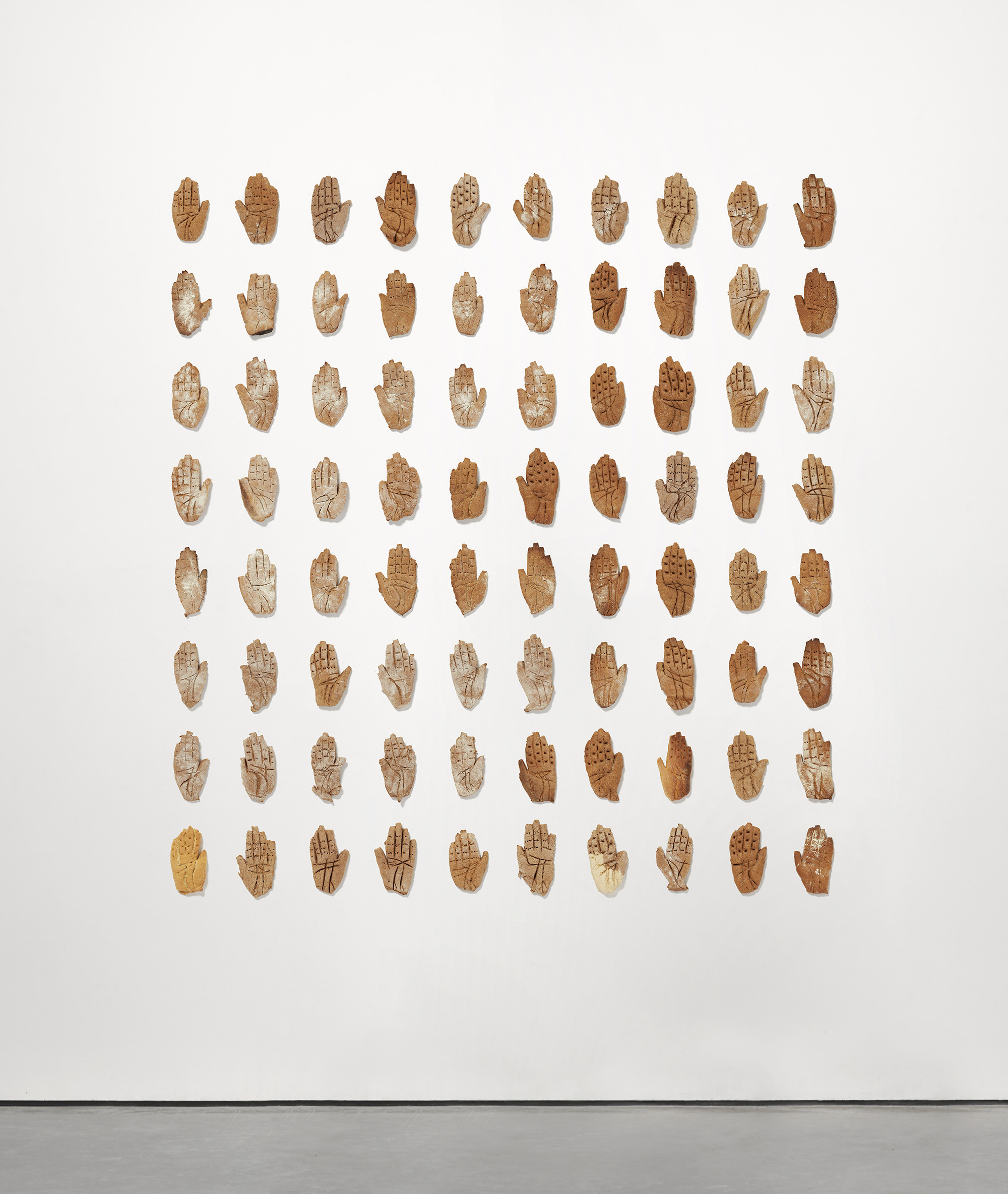
▲Bread Hands - site specific wall installation (2019), Courtesy of Marc Quinn studio
Marc Quinn first raised to fame in 1991 with his sculpture Self (1991). The artist made a head of himself with eight pints of his own frozen blood. From then on, Quinn started to explore with different materials and form of art, such as ice blocks, glass, marbles, biological DNA. His other critically acclaimed works include Alison Lapper Pregnant (2005), exhibited on the fourth plinth of London's Trafalgar Square and Breath (2012), a colossal replica of Alison Lapper Pregnant commissioned for the 2012 Paralympics opening ceremony.
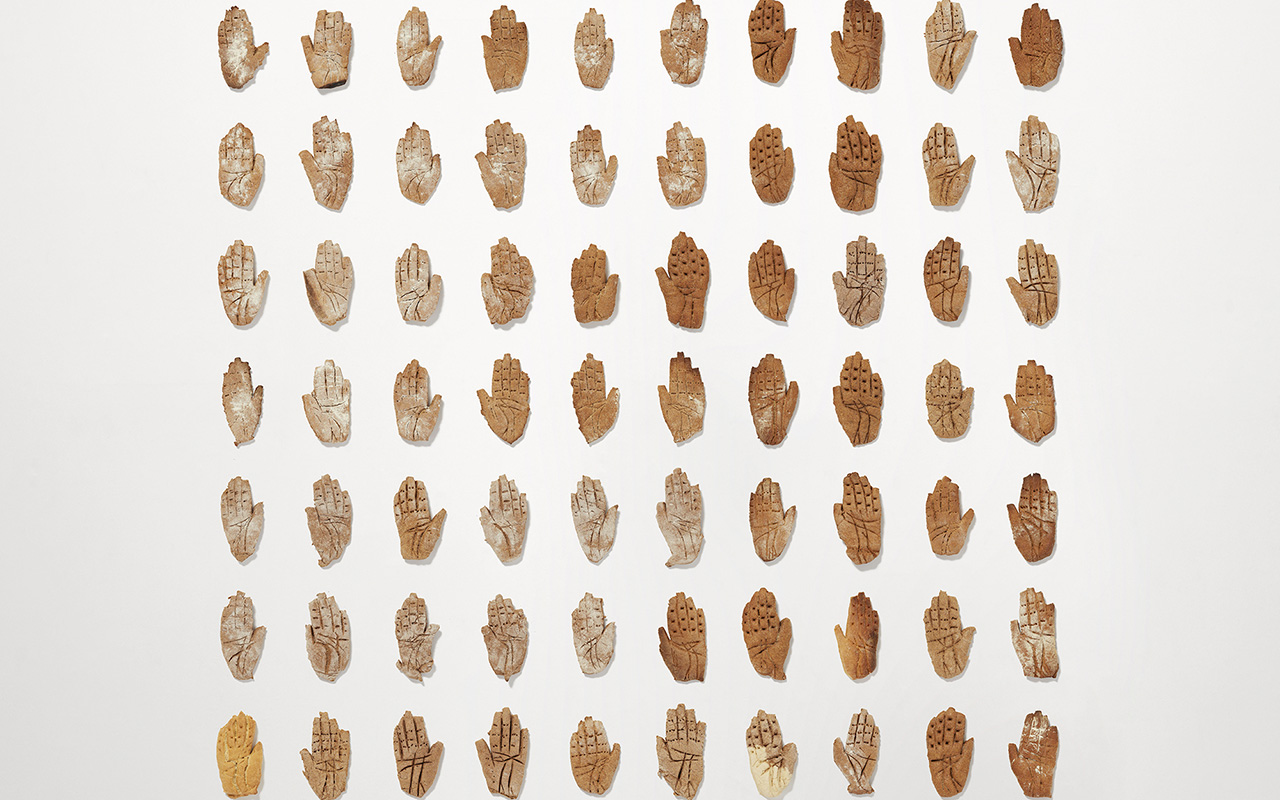
The exhibition at the CAFA Art Museum will feature one of Quinn's early unconventional artworks, the bread sculpture series. Quinn first created his Bread Hands installation in 1991 where he repeatedly traced around his hand on bread, forming a pattern of his own physical identity. The religious symbolism of bread indicates human flesh and use its transformation from a mouldable dough to a solid form to create highly expressive process-led sculptures. The artworks reflect the mutability of life and demonstrating how time and external forces can distort our flesh and our memories. For Under the Skin, the artist has returned to this work to create a collaborative, participatory installation where visitors will be invited to make their own bread hands at a kiln situated inside the gallery.
Another well-known artwork at Quinn's exhibition in Beijing is the We Share Our Chemistry with the Stars (2009). The artist printed the iris of a human at an enormous scale. The individuality of an iris and the symbolism of the human eye render each work a microscopic map of the individual's identity. This body of work reflects Quinn's ongoing interest in creating portraits that are more than just an image of a person but are an actual visual index of their identity.
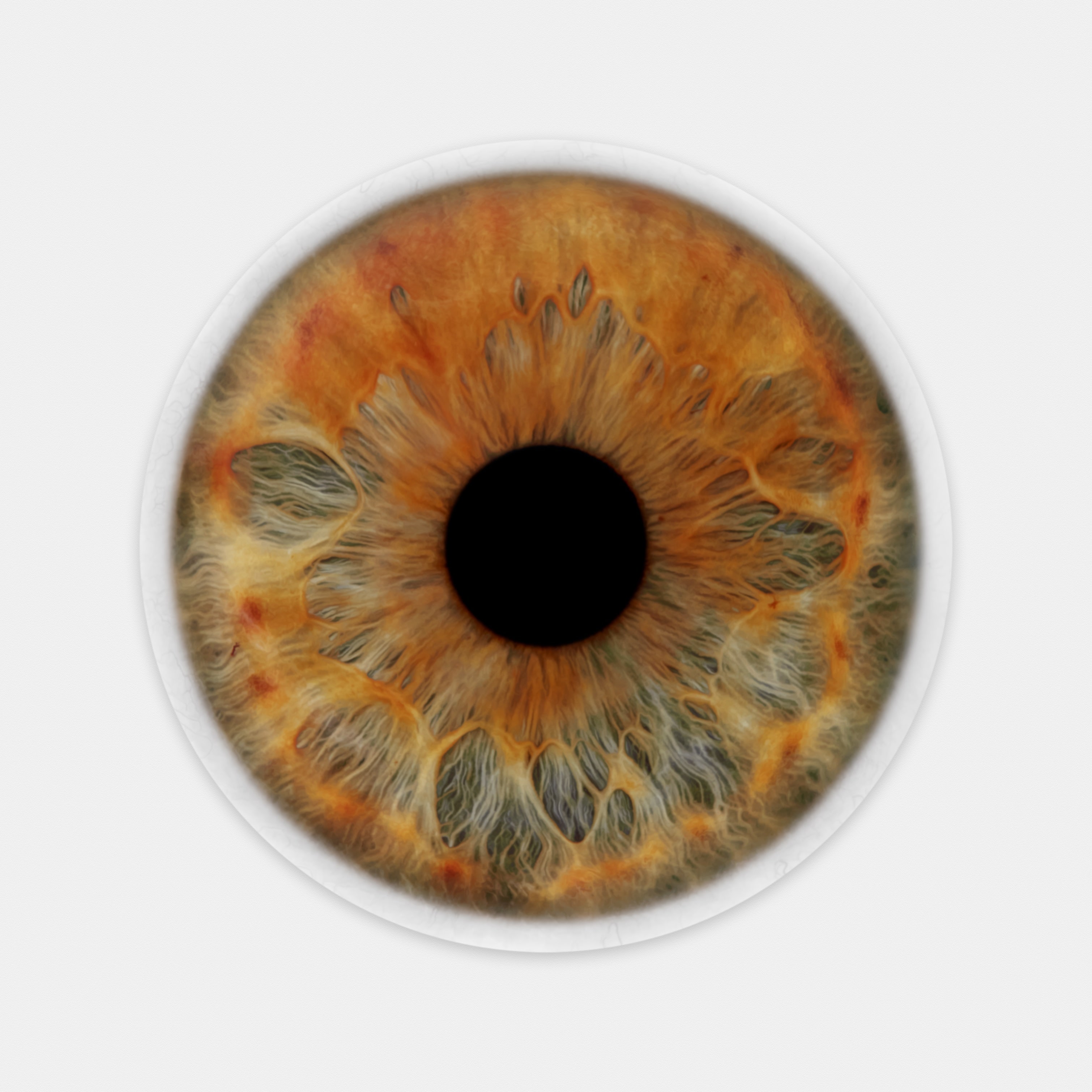
▲ We Share Our Chemistry with the Stars - MQ2019 -title TBC, Courtesy of Marc Quinn studio
Nevertheless, the exhibition won't not only show Quinn's previous works. Some of his relatively new works, such as series All About Love (2016-2017) will also be displayed at the show. Again using fragmented sculptures of the human body, this time the artist want to explore emotions surrounding love. Each sculpture is a life-cast of two lovers holding one another in different poses. Without heads or faces, Quinn desires to reflect the language of classical art and show how it is relevant to contemporary culture.
The exhibition will start from 8 March until 24 April at Gallery 3B, CAFA Art Museum.